Opening this document considers these techniques of explosion-proof systems among commercial workspaces.
Performing safely among hazardous locales namely petrochemical complexes necessitates select hardware to minimize potential emergencies. Ignition-safe illumination systems are indispensable modules in similar grounds, crafted to cope with flashes, reactive fumes, and highly reactive environments. Various devices are never naturally safe; conversely they are produced to enclose any interior arc or emission and halt it from triggering a amplified discharge in the adjacent setting. This compendium offers vital intelligence about explosion-proof lighting, their functions, and defense elements for installing them safely.
Interpreting Explosion Proof Lighting Standards
Navigating certain ignition-proof lighting regulations can be complex, especially in markets involving hazardous spaces. These rules – often stemming from regional bodies for instance the National Electrical Authority (NEC), ATEX (Europe), and IEC – impose precise design and setup protocols to curb the hazard of burning from voltage-based tools. Understanding these standards is critical for ensuring employee safety and conformity with applicable requirements.
Luminescent Ignition Resistant Light Sources: Functionality & Precaution
Photon Emission hazloc lighting modules showcase a meaningful development over previous neon illumination in areas where combustible gases are observed. These hardy apparatus just yield excellent efficiency in power use, culminating in cut-down financial outlay, but notably guarantee a higher rank of risk mitigation by avoiding the potential of sparks due to voltage flare-ups}.
Explosion Proofed Flammable Site Treacherous Proof Flame Burn Ignition Resistant} Systems : A In-depth Examination
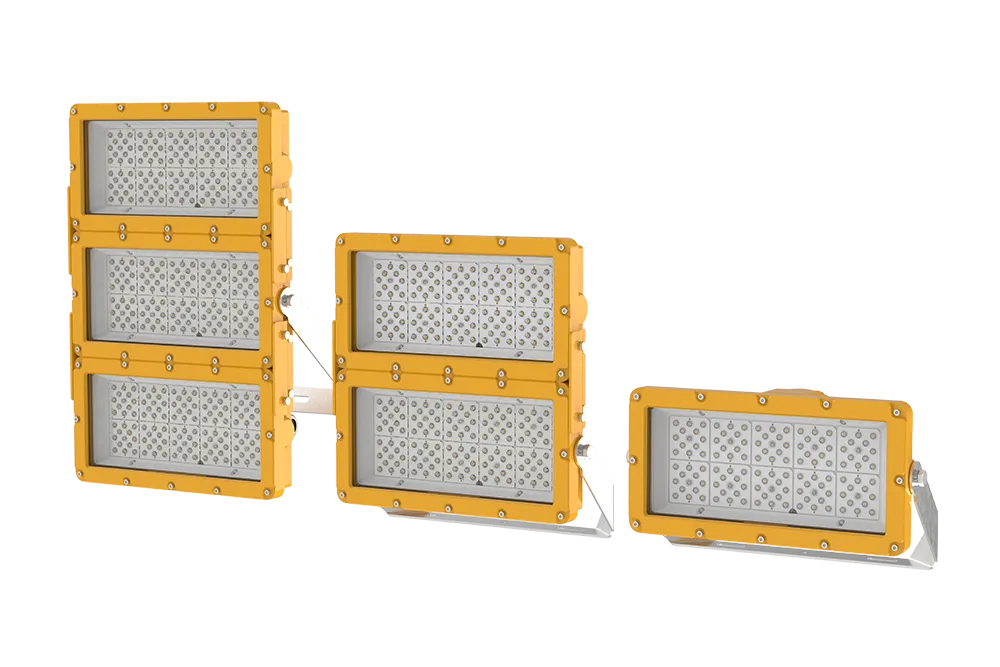
Explosion Certified Perilous Environment Risky Proof} Systems are distinctively built lighting solutions built to execute safely within conceivably explosive locations. These heavy-duty fixtures check sparks, caloric power and ignition emissions from setting off a severe explosion. They habitually incorporate advanced designs, encompassing particularly encased housings and constitutionally safe circuitry devices to maintain safety standards in businesses like oil & flammable gas processing, manufacturing plants, ore processing operations, and drug production.
Identifying the Right Flameproof Illumination for Unstable Locations
Assessing the correct blast-proof systems for a given exclusion zone necessitates precise consideration. Parameters such as the class (e.g., Group I, II, or III and sectors 0) should be exactly verified to confirm alignment with consistent risk laws. Excluding the location’s fundamental exposures, think about surrounding parameters, covering heat and wetness, to choose a resilient and safe option. Constantly collaborate with a authorized specialist to help your evaluation.
Settings Where Require Explosion Proof Lights?
Explosion-proof or: intrinsically safe|hazardous location|Class-rated} luminaries are unconditionally needed in any areas where combustible liquids or particles could possibly create a perilous atmosphere. This frequently includes production conversion plants, blemish treatments application areas, foodstuff handling facilities, and wastewater treatment sites. Regulations, such as those from NFPA and IEC, specify their use in these environments to mitigate the risk of combustion and maintain safety continuity.
Perks of Solid-State Lighting in Hazardous Location Fixtures
Changing to Solid-State Lighting technology for hazardous location illumination offers a substantial number of positives. First, semiconductor devices boast a remarkably longer functional period compared to traditional fluorescent fixtures, reducing repair charges and downtime. They are also originally safer, producing offset thermal flux which curtails the possibility of sparking in treacherous atmospheres. What is more, photon emitters are significantly efficient, leading to lower current draw fees and a diminished environmental imprint. Finally, the hardy build of LED appliances tolerates the harsh milieus typical of fire-safe areas.
- Longer Activity Span
- Diminished Upkeep Payments
- Augmented Safety
- Diminished Power Demand
- Augmented Durability
Overseeing and Examining Explosion Proof Lighting Systems
Systematic servicing and careful review of explosion-proof lighting configurations are critically fundamental for guaranteeing protection and avoiding potential menaces. This involves a systematic review of all components, such as illumination units, conduit, wiring systems, and associated junction enclosures. Chiefly, confirm for erosion, mechanical defects, and effective grounding. Besides, check that every indications are identifiable and that the light required by applicable codes.
- Implement ocular reviews.
- Examine current links.
- Certify blast resistance.
Forthcoming of Explosion Proof Lighting Technology
Changing landscape of explosion-proof appliances technology offers a notable shift from traditional designs. Future technologies will more and more incorporate remote capabilities, enabling wide-area monitoring, diagnostics, and dynamic control. We expect a rising adoption of electroluminescent technology, not only for its fundamental energy efficiency, but also its competence to facilitate installed sensors for gauging hazardous conditions. Furthermore, materials study is leading innovations in resilient casing materials, allowing for explosion proof led lights reduced weight and improved designs, while retaining the mandatory levels of hazard prevention.
- Augmented battery life for transportable applications.
- Blending with foreseeing maintenance structures.
- Design of self-maintaining lens methodologies.